Choosing a Mobile Home Skirt is not merely a color decision. It affects weather protection, ventilation, appearance, and access beneath the home. China’s manufacturers offer varied materials and production capabilities, but a polished catalog does not guarantee a suitable product. Details matter.
Building-science expert Joseph Lstiburek’s moisture-control guidance is often paraphrased this way: “Keep water out, and allow assemblies to dry.” This is a summary, not a verified verbatim quotation. It offers a useful lens for comparing skirt panels, vents, and installation systems. Look closely at material thickness, UV resistance, fastening methods, and how panels accommodate uneven ground. Ask for product data and clear installation guidance. Small details count.
This guide introduces ten Chinese manufacturers and the factors buyers can use to assess them. It considers product range, customization, quality documentation, export experience, and communication—not just headline prices. A supplier may offer attractive panels but limited technical support. Another may provide stronger documentation yet require longer lead times. No list is perfect. Factory claims should be checked against samples, specifications, and direct questions. That extra effort can reveal gaps a sales page will not show. The right Mobile Home Skirt depends on the home, climate, site conditions, and buyer’s priorities. There is no universal winner.
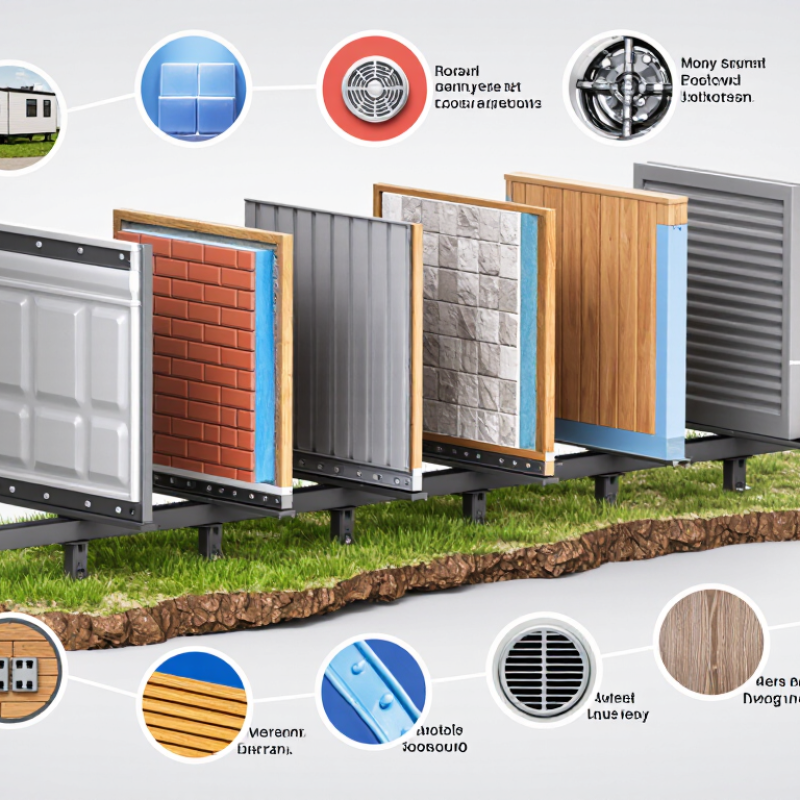
Mobile home skirting is a protective enclosure installed around a manufactured home’s lower perimeter. It covers the exposed crawlspace between the floor and ground. The U.S. Census Bureau’s 2023 Manufactured Housing Survey recorded about 90,000 new homes placed in the United States. That volume reflects a continuing need for practical, durable skirting systems.
Skirting helps reduce wind exposure, standing-water splash, and animal entry. It also improves the home’s appearance. More importantly, it supports a controlled crawlspace environment. Proper ventilation limits condensation, while sealed gaps reduce cold-air movement. Skirting is not a magic energy cure. Poor insulation above the crawlspace may still cause cold floors and high heating bills. The U.S. Department of Energy recommends treating insulation, air sealing, and moisture control as connected tasks.
Common materials include vinyl panels, insulated composite boards, metal, and concrete-based products. Vinyl is lightweight and easy to replace. Rigid panels provide stronger thermal resistance. Every installation should include a secure access door and correctly sized vents. HUD’s Manufactured Home Construction and Safety Standards provide technical guidance for crawlspace access, ventilation, and structural safety.
Field installers often check the ground line before cutting panels. Uneven soil can leave sharp openings beneath finished skirting. Small details matter. A drainage path may also be necessary near downspouts. Buyers should question dramatic savings claims because results depend on climate, insulation quality, ventilation, and workmanship.
Even experienced contractors sometimes underestimate seasonal ground movement. That mistake deserves a second inspection.
China’s mobile home skirting industry is expanding with the growth of modular housing, temporary accommodation, and park-based residences. Manufacturers commonly produce vinyl, metal, composite, and insulated panels for different climates. These products help reduce wind exposure, improve visual appearance, and protect plumbing beneath homes. In colder regions, insulated skirting can limit heat loss around floor areas. In coastal locations, corrosion resistance matters more than appearance.
Market demand is becoming more practical. Buyers compare panel thickness, installation speed, ventilation design, and replacement costs. Contractors also examine packaging quality because damaged corners create delays on site. From field experience, accurate measurements often matter more than attractive product photos. However, not every low-cost panel performs well over several winters. A useful market forecast is also imperfect, because construction cycles and material prices can change quickly. Reliable manufacturers should provide clear specifications, installation guidance, sample testing, and responsive technical support.
Tips: Check local wind, moisture, and temperature conditions before selecting skirting. Request material samples and inspect joints, fasteners, and ventilation openings. Compare the full installed cost, not only the panel price. A small test installation can reveal fitting problems early.
Selecting a leading Chinese mobile home skirting manufacturer requires more than comparing catalog photos or quoted prices. Ask how panels handle prolonged sun, rain, freeze-thaw cycles, and damp ground near the home. Request material specifications, including thickness, coating, and stated temperature range. Then inspect a physical sample for sharp edges, uneven color, and flexible joints. Small details matter. Confirm whether the supplier tests finished panels or relies only on incoming material checks.
Production capability should match the order, but capacity alone is not proof of dependable quality. Review recent batch records, packaging methods, lead-time assumptions, and procedures for replacing damaged pieces. Ask for installation drawings that show corner joins, ground clearance, ventilation openings, and fastening points. These details can reveal whether a design suits real site conditions rather than a showroom wall. Evaluate replies for specificity: clear measurements and limitations are more useful than broad promises. Where possible, speak with repeat buyers and compare their reports against supplied documents. No checklist is perfect. Even careful screening can miss a production change, so keep sample approval and written tolerances in the purchase record.
China’s mobile home skirting sector includes manufacturers with different materials, production strengths, and customization options. These ten profiles represent useful supplier types rather than verified company rankings. Profile one focuses on vinyl panels for straightforward installation. Profile two offers galvanized steel skirting for buyers seeking a firmer finish. Profile three works with aluminum, valued for its light weight. Profile four specializes in insulated panels for colder sites. Details matter.
Profile five produces vented sections to support airflow beneath homes. Profile six emphasizes made-to-measure dimensions for uneven foundations. Profile seven handles color matching and textured surfaces. Profile eight serves bulk orders with standardized panel sizes. Profile nine combines skirting panels with access doors and corner pieces. Profile ten offers mixed-material solutions for projects with specific site conditions. These distinctions are starting points, not proof of performance. Ask for material specifications, sample panels, installation guidance, and clear lead times. Check how edges, fasteners, and vents are finished. A supplier’s catalog may look complete, yet small measurement tolerances can complicate installation. Verify each claim against current samples and project requirements.
Illustrative side lengths for a rectangular home footprint. The four sides total 168 linear feet before accounting for doors or other openings.
China Top 10 Mobile Home Skirting Manufacturers
Comparing manufacturers means looking beyond price and appearance. The U.S. Census Bureau’s Manufactured Housing Survey recorded 103,314 manufactured-home shipments in 2024, showing a sizable market for related products. That figure does not measure skirting demand, but it offers useful market context. Compare suppliers by material options, documented product dimensions, installation details, and replacement-part availability. Vinyl panels are light and simple to handle; galvanized steel offers a firmer barrier but needs sound corrosion protection. Concrete-style panels can look substantial, though their weight may require stronger support. No material wins in every setting.
Product range matters, too. Check whether a manufacturer offers matching corners, access doors, ventilation panels, and adjustable sections for uneven ground. Ask for panel thickness, finish specifications, warranty terms, and clear installation guidance. For buyers comparing Chinese manufacturers, request current test documentation and confirm how products are packed for shipment. Published capability claims can be useful, but they are not a substitute for samples. I would not rank suppliers from catalog photos alone.
Tips: Measure the home’s perimeter and ground clearance before requesting a quote. Compare like-for-like specifications, not just per-panel prices. Ask how damaged panels are replaced. A small sample beside the home can reveal color and texture differences that a screen hides.
Comparison of ten commonly available mobile-home skirting system types. Rows are product categories, not verified company profiles or a ranked list of manufacturers.
| No. | Skirting System | Typical Material | Common Product Format | Ventilation and Access | Typical Strengths | Key Considerations |
|---|---|---|---|---|---|---|
| 1 | Standard vinyl panels | PVC or vinyl | Interlocking or overlapping panels with trim channels | Vent panels and removable sections can be incorporated | Lightweight, low-maintenance, and available in varied colors and textures | Can expand or contract with temperature; installation should allow for movement |
| 2 | Insulated vinyl panels | Vinyl facing with an insulating foam layer | Rigid or semi-rigid panels, commonly fitted into a perimeter track | Ventilation openings and access panels must be planned separately | Adds insulation to the skirting assembly compared with uninsulated panels | Performance depends on the full installation; it does not replace required crawl-space ventilation |
| 3 | Metal panels | Coated steel or aluminum | Flat, ribbed, or corrugated panels with metal or compatible trim | Vents and service openings can be cut or fitted into the panel system | Rigid appearance, noncombustible metal material, and straightforward panel cleaning | Coating, cut-edge protection, corrosion exposure, and sharp edges require attention |
| 4 | Pressure-treated wood panels | Pressure-treated lumber or plywood intended for exterior use | Framed panels, boards, or sheet goods | Vent grilles and hinged or removable access sections can be added | Can be cut and adapted on site using common woodworking tools | Needs suitable ground clearance, sealed or protected cut edges, and periodic inspection |
| 5 | Fiber-cement panels | Cement, cellulose fibers, and other reinforcing components | Flat sheets or siding-style boards on a suitable support frame | Vent openings and access panels require planned framing and detailing | Stable, paintable surface with a solid appearance | Heavier and more demanding to cut than vinyl; follow product-specific handling and fixing instructions |
| 6 | Faux-stone panels | Molded polymer or composite panels with a stone-look finish | Lightweight decorative panels with interlocking edges or trim systems | Vent and access components are typically separate or integrated as compatible accessories | Provides a masonry-like appearance without installing individual stones | Appearance, impact resistance, and weather performance vary by panel construction |
| 7 | Brick veneer skirting | Brick veneer units with mortar and a supporting assembly | Masonry veneer installed over an appropriately designed support | Ventilation and access openings must be incorporated into the masonry layout | Durable masonry appearance and resistance to ordinary surface wear | Requires suitable support and detailing; weight and settlement must be considered |
| 8 | Concrete masonry units | Concrete blocks or related masonry units | Block wall assembled with mortar or another specified masonry system | Vents and access openings need to be designed into the wall | Solid, durable construction with a substantial finished appearance | Needs appropriate foundation or bearing support and careful moisture management |
| 9 | Decorative lattice panels | Wood, vinyl, or composite lattice | Open-grid panels installed in a perimeter frame | Open-grid design allows airflow; framed sections can provide access | Allows ventilation and offers a lightweight, decorative enclosure | Provides limited screening and is not an insulating or solid weather barrier |
| 10 | Composite or cellular PVC panels | Engineered wood-plastic composite or cellular PVC, depending on product | Boards, sheets, or modular panels with compatible framing and trim | Vent grilles and removable access sections can be included in the layout | Consistent panel appearance and options designed for exterior applications | Material properties vary; check expansion, fastening, UV, and ground-clearance instructions |
Product specifications, ventilation requirements, fire performance, and installation details vary by jurisdiction and by product. Confirm local requirements and the manufacturer's current technical documentation before selection or installation.
It covers the crawlspace between a manufactured home’s floor and the ground. It can help limit wind, water splash, and animal entry.
It may reduce cold-air movement, but it is not a complete energy fix. Insulation, air sealing, and moisture control matter too.
Vinyl is lightweight and easy to replace. Metal can provide a firm barrier, while concrete-style panels are heavier and may need stronger support.
Ask about panel dimensions, thickness, finish, warranty terms, and installation instructions. Check for matching corners, vents, access doors, and replacement parts.
Correctly sized vents support crawlspace ventilation. An access door makes inspection and maintenance easier. Small details matter.
Measure the home’s perimeter and ground clearance. Compare similar specifications, not just the price per panel.
Check the ground line for uneven soil and gaps. Look for drainage needs near downspouts, too. I would inspect it twice.
Not always. A small sample beside the home can reveal color and texture differences that a screen hides. I may be missing something, but samples seem worth the effort.
This article provides a practical overview of China’s mobile home skirting sector, beginning with an explanation of what a Mobile Home Skirt is and how it helps enclose the space beneath a manufactured or mobile home. It discusses common purposes such as improving appearance, reducing exposure to wind and weather, supporting ventilation planning, and helping homeowners create a cleaner, more finished exterior.
The article also examines China’s industry development and market characteristics, then introduces the criteria used to identify leading manufacturers, including material quality, product durability, customization options, production capacity, quality control, technical support, and export experience. Ten Chinese manufacturers are profiled according to their product ranges and manufacturing strengths, without focusing on brand promotion. A final comparison reviews differences in materials, styles, installation systems, performance, and service capabilities, helping buyers evaluate suppliers more effectively and select solutions suited to different climates, housing layouts, budgets, and project requirements.

House Modular Building