Choosing Tiny Home Builders for global buyers requires more than comparing attractive photos and low prices. A polished website can hide weak construction, unclear delivery terms, or limited after-sales support. Experienced buyers should examine completed projects, structural drawings, insulation specifications, plumbing layouts, and independent customer reviews. Ask for photographs from the factory floor, not only staged interiors.
Andrew Morrison, a respected tiny-home designer and educator, has said, “The tiny house is not a product; it’s a lifestyle.” That idea matters when selecting builders across borders. A reliable company should understand how the home will be transported, installed, connected, and maintained in its destination country. Confirm the builder’s experience with overseas projects, local engineering requirements, electrical standards, climate conditions, and foundation planning. A coastal home may need different materials from one built for a cold mountain region.
Look closely at the contract. It should explain materials, construction stages, inspection points, payment schedules, delivery responsibilities, warranty coverage, and possible delays. Request realistic shipping estimates, including permits, cranes, storage, and port handling. These costs are often overlooked. Sometimes, the cheapest quote becomes the most expensive choice.
Speak directly with previous clients, preferably those living in a similar climate. Notice how the builder responds to difficult questions. Transparency is a strong signal.
No builder is perfect. Even skilled Tiny Home Builders can face transport damage, weather delays, or design changes. The right partner acknowledges these risks and offers practical solutions. Global buyers should choose documented experience over impressive promises. A beautiful tiny home means little if support disappears after delivery.
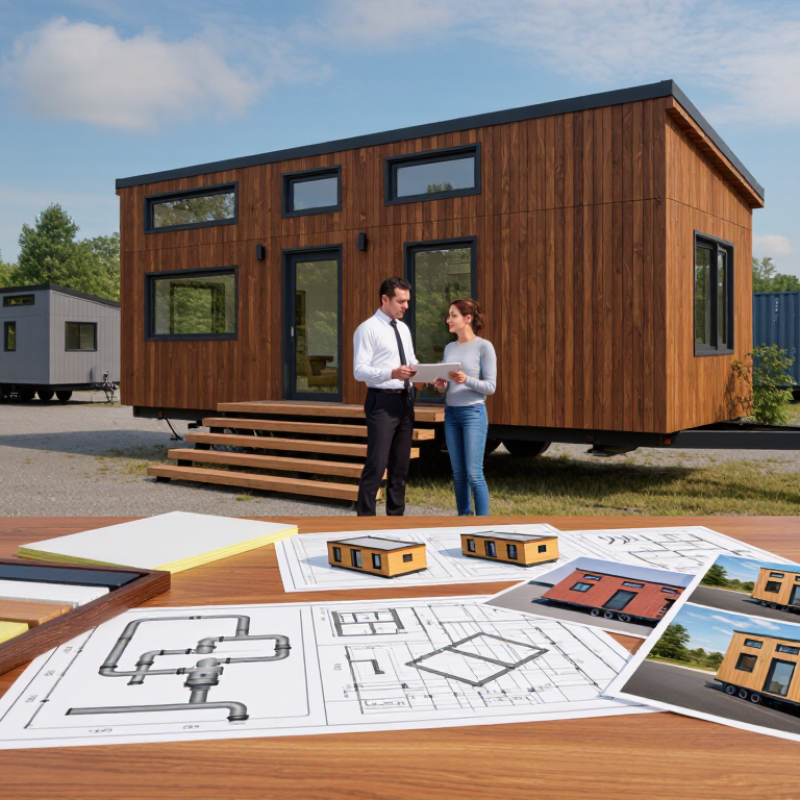
Choosing a tiny home builder for an international project starts with a precise personal brief. Decide how many people will live there, how often, and in which climate. A couple working remotely may need two desks, strong insulation, and quiet ventilation. A family may need safer storage, wider circulation, and flexible sleeping space. Write it down. Do not trust attractive floor plans alone.
Measure the intended site, including road width, slope, utility access, and delivery clearance. Then check local rules for transport dimensions, foundations, electrical systems, plumbing, fire safety, and occupancy permits. Requirements differ between countries and sometimes between neighboring regions. Ask builders for drawings, material specifications, load calculations, and examples of completed projects in similar climates. A knowledgeable builder should explain what they can certify and what local professionals must approve. Vague answers are a warning.
For overseas buyers, confirm currency, taxes, insurance, shipping responsibility, assembly support, and after-sales communication. Request a written timeline with inspection points and payment stages. Use video calls to inspect construction details, such as window seals, roof joints, and service access panels. In practice, small omissions become expensive across borders. Still, no checklist catches everything. Leave room for revisions. A practical builder welcomes questions, admits limitations, and documents changes before construction begins.
| Requirement Area | Typical Planning Data | Why It Matters to Global Buyers | Questions for the Builder | Documents or Checks to Request |
|---|---|---|---|---|
| Intended Use | Primary residence, seasonal home, guest unit, rental unit, mobile office, or emergency accommodation. | Local rules, insulation levels, fire safety, utility connections, and minimum-room requirements may differ according to use. | Is the design intended for full-time occupancy or occasional use? Can the layout be adapted to local housing regulations? | Written specification identifying occupancy type, design service life, maintenance requirements, and intended installation method. |
| Floor Area and Layout | Many tiny homes are planned below approximately 37 m², but legal definitions vary widely by country and municipality. | A home may be classified differently depending on whether it is fixed, transportable, trailer-mounted, or connected to permanent services. | What is the internal floor area, usable ceiling height, storage capacity, and maximum number of occupants? | Dimensioned floor plans, elevations, ceiling-height schedule, furniture plan, and calculation of net usable area. |
| Transport Dimensions | A common road-transport planning checkpoint is about 2.55 m maximum body width in many European road contexts; actual limits, height, length, and permits vary by route and country. | Oversized loads can require route surveys, escort vehicles, special permits, lifting equipment, or port handling. | What are the packed dimensions, gross weight, axle loads, lifting points, and transport route assumptions? | Certified weight report, transport drawings, axle-load data, lifting instructions, packaging plan, and route-clearance checklist. |
| Structural and Environmental Loads | Design may need to account for local wind, snow, seismic, flood, and foundation loads; values must be calculated for the exact site. | A structure suitable for a mild climate may require reinforcement in high-wind, heavy-snow, earthquake, or cyclone-prone areas. | Which design code and site load values were used? Can the structure be recalculated for the destination address? | Structural calculations, material grades, connection details, foundation loads, and local engineer review requirements. |
| Thermal Performance | Specify insulation values using the destination country’s required U-value or R-value system; roof, wall, floor, windows, and doors should be assessed separately. | Cold climates require heat retention, while hot and humid climates require solar control, ventilation, moisture management, and cooling capacity. | What are the assembly U-values, window ratings, air-tightness details, vapor-control strategy, and heating or cooling loads? | Thermal calculation, condensation-risk assessment, product datasheets, window performance data, and HVAC sizing report. |
| Electrical Compatibility | Typical supply systems include 120 V at 60 Hz in the United States and Canada, 230 V at 50 Hz in much of Europe and Australia, and 100 V at 50 or 60 Hz in Japan. | Voltage, frequency, plug type, earthing, circuit protection, and inspection requirements can affect every installed appliance and system. | Can the electrical system be built for the destination voltage and frequency? Are appliances locally compatible and certified? | Single-line diagram, load schedule, wiring specifications, protection-device details, test certificates, and local electrician sign-off. |
| Water, Wastewater, and Utilities | Possible configurations include municipal connections, storage tanks, rainwater systems, septic systems, composting toilets, or approved wastewater treatment systems. | Plumbing approvals and environmental rules are usually controlled by the destination jurisdiction and site conditions. | What connection sizes, pressure ranges, drainage falls, tank capacities, and wastewater approvals are required? | Plumbing schematic, fixture flow data, connection specifications, wastewater design, installation manual, and authority approvals. |
| Fire and Life Safety | Key considerations include smoke alarms, carbon-monoxide alarms where fuel-burning appliances are used, safe escape routes, fire-resistant materials, and appliance clearances. | Fire-safety requirements may vary according to occupancy, building classification, fuel type, and whether the unit is fixed or mobile. | How many independent exits are provided? Which fire ratings, alarm types, and combustion-air requirements apply? | Fire-safety schedule, escape-route drawing, material classifications, alarm specifications, and installation clearances. |
| Materials and Import Logistics | Timber, insulation, electrical equipment, plumbing products, coatings, and treated materials may be subject to import, quarantine, or customs controls. | Documentation gaps can cause customs delays, replacement costs, or rejection of non-compliant materials. | Which components are included, where were they manufactured, and can locally approved alternatives be substituted? | Commercial invoice, packing list, material declarations, treatment certificates where applicable, country-of-origin data, and spare-parts list. |
| Installation and After-Sales Support | Allow for site access, foundation preparation, crane or unloading equipment, utility connection, commissioning, inspection, and future maintenance. | International projects need clear responsibility for local contractors, inspection corrections, replacement parts, and warranty travel. | Who handles installation, commissioning, defects, replacement parts, and technical support after delivery? | Installation method statement, handover checklist, warranty terms, maintenance schedule, service response process, and parts catalogue. |
| Budget and Total Cost | Calculate the complete delivered cost: design, permits, construction, transport, insurance, customs, taxes, foundations, utilities, installation, inspections, and maintenance. | The quoted factory price may exclude major destination costs and compliance work. | Which items are included, excluded, provisional, or subject to exchange-rate changes? What payment milestones protect the buyer? | Itemized quotation, Incoterms, tax assumptions, transport insurance, change-order procedure, payment schedule, and completion criteria. |
Note: Planning figures and international requirements should be verified with the destination country’s building authority, transport authority, utility providers, customs office, and a locally qualified professional before purchase.
Ask for container dimensions, loading photographs, insurance terms, and port responsibilities. Request a written schedule with weather and customs allowances.
The contract should clearly assign responsibility for damaged cladding, delays, unloading, and local transport. Do not accept vague delivery promises.
Confirm foundation requirements, crane access, utility connections, and local labor qualifications. A beautiful plan may still fail on site.
No. Countries may use different structural, thermal, fire, and accessibility requirements. Have a local professional review the drawings.
It should specify materials, appliances, insulation, taxes, transport, permits, installation duties, and measurable finish standards. “Premium” is not precise enough.
Link staged payments to completed work, inspections, and photographs. Keep a small final balance until delivery and defect checks finish.
Request dates for design approval, construction, inspection, dispatch, and installation. Include written procedures for weather and shipping delays.
Check duration, covered systems, exclusions, response times, replacement shipping, travel costs, and local labor. Overseas repairs can become expensive quickly.
Request spare-part lists, troubleshooting help, response targets, and two recent overseas references. Prepared testimonials may not show the whole picture.
Store signed contracts, invoices, specifications, inspection reports, messages, and installation photographs in one secure file. Small omissions become costly.
Choosing the right Tiny Home Builders begins with clearly defining your needs, including the home’s size, layout, intended use, climate, mobility, and destination-country requirements. International buyers should carefully verify a builder’s experience, credentials, completed projects, and ability to serve customers across borders. Comparing design styles, construction materials, pricing structures, energy features, and customization options can help ensure the home matches both personal preferences and practical expectations.
Before making a decision, review the entire delivery process, including international shipping, site preparation, installation, local regulations, inspections, and after-sales support. A reliable builder should provide clear contracts, realistic timelines, transparent payment arrangements, warranty details, and procedures for resolving issues. Buyers should also confirm what is included in the quoted price and identify any additional costs, such as transportation, taxes, permits, foundation work, or local modifications. Careful research and written communication can reduce uncertainty and support a secure, well-informed purchase.

 House Modular Building