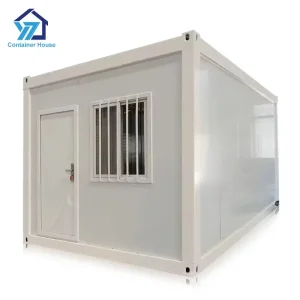
Engineered for immediate configuration, offering optimal structural integrity and premium insulation metrics.
Thermal Resistance
Dedicated Factory Workers
R&D Technical Staff
Industry Experience
A deep dive into structural performance, sustainability, and technological roadmaps under extreme climates.
Kuwait's construction and industrial sectors are undergoing a significant transition under the umbrella of Kuwait Vision 2035 (New Kuwait). The development of mega infrastructure projects, expansion of petrochemical zones, and the establishment of new residential cities like Al-Mutlaa and South Saad Al-Abdullah require high-speed building methodologies. Traditional concrete structures, while permanent, are constrained by lengthy construction timelines, intensive on-site labor requirements, and extreme weather limitations. During Kuwait's summer months, where ambient temperatures regularly exceed 50°C (122°F), outdoor work is heavily restricted, causing severe project delays.
This climatic reality has driven a surge in demand for modular container houses and prefabricated buildings. Modular building systems enable off-site manufacturing inside controlled factory environments. By shifting up to 90% of the construction workflow to factories, developers in Kuwait bypass weather-related downtime. Once fabricated, these modular units are transported to remote locations, oil fields, or urban zones for rapid assembly. This modern approach is now the standard for administrative site offices, workforce accommodation complexes, clinics, and security cabins across the country.
On a global scale, the modular housing market is expanding rapidly, driven by the need to optimize building lifecycles and lower carbon footprints. The transition from wet construction to off-site modular manufacturing aligns with international ESG (Environmental, Social, and Governance) targets. Global trends indicate key shifts in how modular architecture is deployed:
Saves up to 50% of the overall project schedule compared to traditional brick-and-mortar builds.
Engineered to withstand extreme sandstorms, high UV index, and coastal moisture levels.
Reduces waste, limits on-site labor overheads, and lowers initial construction budgets.
 House Modular Building